Key Takeaways
- Post frame garages usually cost less, often 20–25% less than stick built garages, because they require less concrete and a simpler foundation, which becomes even more noticeable as building size increases.
- Speed and space are major advantages. Once a level pad is prepared, post frame garages go up faster and create wide-open interior space that works well for vehicles, equipment, storage, and shop use.
- The biggest tradeoff is site prep. Post frame construction works best on properties where a level pad is achievable, and it’s most commonly used for detached garages rather than attached structures.
Pole Barn Garages vs Stick Built Garages: What Most People Get Wrong
At Rockland Builders, we help homeowners compare pole barn garages and stick built garages every day. A common misconception is that pole barns are simply the “cheap” option while stick built garages are always better. In reality, both construction methods have advantages depending on the property, budget, and how the garage will be used.
Everything in this guide is based on what we see in the field. Our goal is to help you understand how post frame construction works, where costs really come from, and how to choose the right structure without surprises during construction.
What Is Post-Frame Construction?
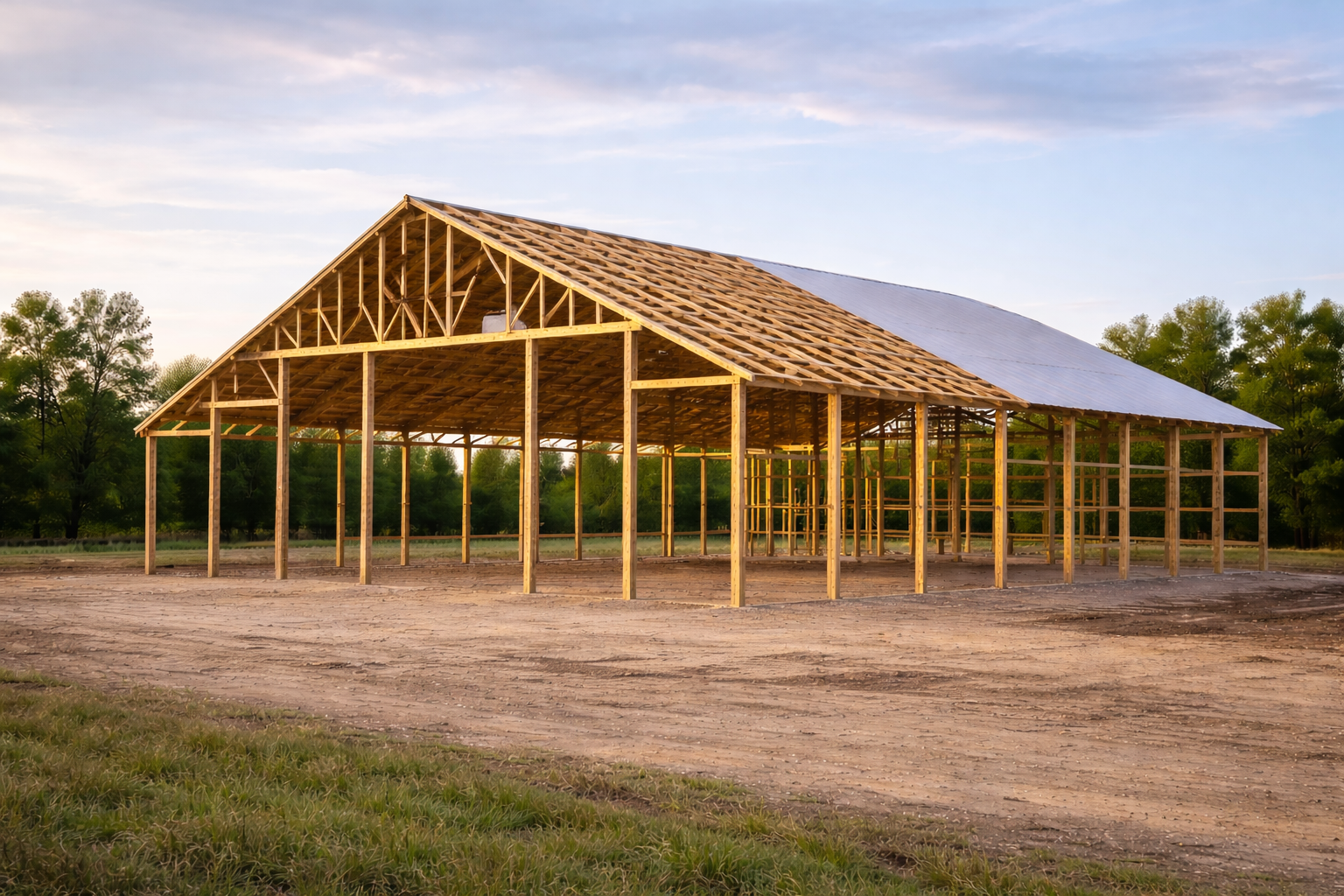
Post frame construction uses large posts or wooden posts to carry the structure of a building. Instead of continuous foundation walls, post frame buildings rely on posts set in the ground or on engineered footing pads at ground level. Those posts support the roof, walls, and overall structure.
We often recommend post frame construction for garages, shops, storage buildings, and barns because it uses fewer materials while still creating a durable building. Pole barns and pole buildings work especially well when wide-open space, taller walls, or flexible floor plans are needed.
Post Frame vs Stick Built Garages: How They Differ
Stick built garages use a stick frame system similar to a house, with a concrete foundation, framed walls, and closely spaced studs.
This approach works well for many residential buildings but requires more concrete, more framing, and a longer construction timeline.
Post frame garages rely on large posts sunk into the ground to support the structure. Because posts carry the load, the foundation requirements are reduced and wider spans are possible with fewer interior walls.
From our experience, this difference has a major impact on cost, materials, and construction speed.
Post Frame Garage Pros and Cons
The biggest advantages are lower cost and faster construction.
Post frame garages typically require less concrete, which helps reduce foundation expense. Using fewer materials allows us to save money while still delivering a strong, durable structure, often putting post frame garages roughly 20–25% lower than comparable stick built garages.
Once a level pad is prepared, construction moves efficiently and creates open space for vehicles, equipment, or a shop.
The main tradeoffs involve site conditions, and this is the biggest downside we see in practice. Post frame construction requires a level pad, so soil conditions and grading matter more. On sloped properties, additional excavation may be needed. Post frame garages also work best as detached garages rather than attached to a house.
Why Pole Barn Garages Cost Less Than Stick Built Garages
The primary reason pole barn garages often have a lower cost than traditional foundation or stick built garages is the foundation.
A full concrete foundation is one of the most expensive parts of any building. Post frame construction reduces that expense by using posts and engineered footing systems instead of continuous foundation walls. Less concrete and a simpler framing system mean lower labor costs and a faster build.
In our experience, the savings become more noticeable as the size of the garage increases.
How Much Does a Post Frame Garage Cost?
Post frame garage cost depends on size, finishes, and site conditions. A 24×36 garage will cost less than a 30×50 or 40×60 structure, but features matter just as much.
Concrete floor options, garage doors sized for vehicles or equipment, windows, siding, roof design, and metal roof choices all influence cost. Insulation, temperature control, and energy efficiency upgrades also affect the final price.
From real-world projects we’ve designed and built, a fully finished post frame garage or shop in the 40×50 to 50×60 range—including concrete, insulation, multiple large garage doors, man doors, and several windows—often lands around the $100,000 range.
That kind of pricing often surprises people, because a stick built garage with similar space and finishes would typically cost significantly more. This is where post frame construction really shines: delivering more usable space for the budget.
How Long Does It Take to Build a Pole Barn Garage?
Post frame construction is typically faster than stick built construction, too. After site prep and pad work are complete, posts are set, framing goes up, and the roof, walls, siding, doors, and windows are installed in a short timeframe.
Interior work such as insulation, heat, electrical, and lighting usually determines the overall schedule, but post frame garages often reach the usable stage sooner than stick built garages.
Foundation Options for Pole Barn Garages
Post frame garages can use posts set in the ground with footing pads, concrete column systems, or alternative concrete foundation designs when required. Modern post protection systems help extend durability and reduce maintenance concerns.
When a concrete floor is planned, we coordinate closely with the concrete guy to ensure proper preparation and timing. These foundation options allow us to balance long-term performance with lower cost.
Durability, Maintenance, and Life Expectancy
A properly constructed post frame building can last for decades. Large posts, treated wood, steel components, and correct installation all contribute to durability. Maintenance requirements are generally low, especially compared to more complex stick built garages.
Post frame buildings also perform well in heavy snow when engineered correctly, making them a reliable option for many properties.
Energy Efficiency and Insulation
Pole barn garages can be insulated effectively. We design wall and roof insulation systems that support energy efficiency and temperature control, allowing garages to stay comfortable for vehicles, equipment, or shop use.
With the right insulation approach, post frame garages can offer similar comfort levels to many residential buildings.
Can a Pole Barn Garage Be Attached to a House?
In most cases, pole barn garages are built as detached structures. Materials like metal siding and roofing don’t always blend well with a house. While attachment is possible in some situations, detached garages are usually the better option in our Lehigh Valley region.
When a Pole Barn Garage Is the Right Choice
Post frame construction is a strong fit for storage buildings, shops, and garages that need open space, tall walls, or large doors. Properties with suitable site conditions benefit the most, especially when keeping cost and construction speed in mind.
Choosing between post frame and stick built garages comes down to property conditions, intended use, and budget. At Rockland Builders, we help clients weigh those factors early so the construction process stays predictable and the final result meets expectations. If you’re looking for a garage construction company near you, we’d love to connect. Call today to learn more.